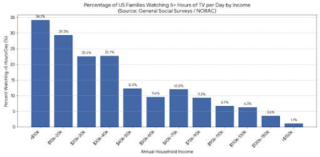
| Roku's 25-year streaming data from high-usage states, combined with AI-generated correlations between income and TV viewing, makes it clear, even considering CES product revelations, why premium brands like Samsung, despite excellent products, are consistently challenged by Chinese competitors: high-income individuals, the intended buyers of premium TVs, are simply not watching television; having money but lacking time, their leisure spending increasingly prioritizes activities that directly enrich their lives—a trend accelerated post-COVID—leaving TV purchases predominantly to lower-income segments, thus creating these market difficulties, with solutions now appearing evident. 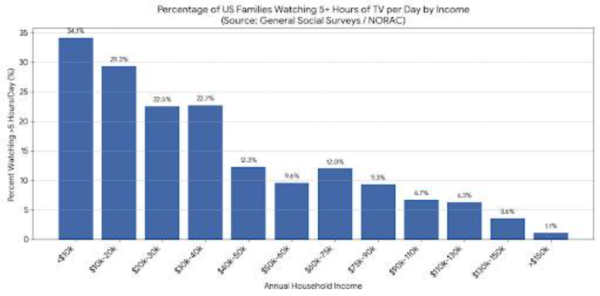
The Free Time Paradox: More Screens, Less Sleep?Despite widespread claims that Americans lack free time due to work and overwhelming responsibilities, data reveals adults average over four hours daily watching television, plus additional hours on other screen-based media, often accumulating seven to thirteen hours of daily media consumption across age groups. This significant allocation of time to entertainment media directly challenges the narrative of an inability to find moments for basic human rituals like family dinners, adequate sleep, or maintaining friendships, leading to skepticism about assertions of pervasive time scarcity. 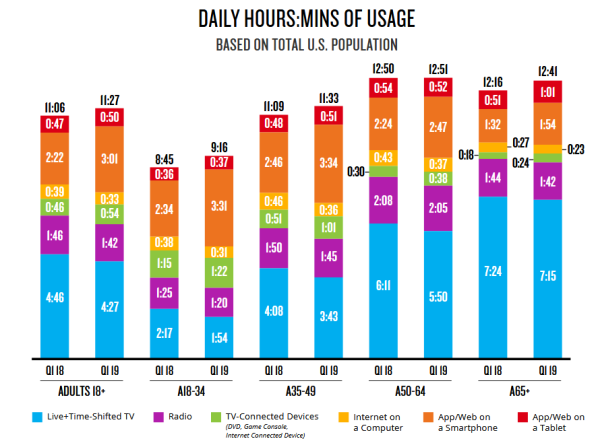
source: https://mises.org/power-market/were-told-americans-have-no-free-time-yet-were-watching-more-four-hours-tv-day 2011 TV Viewing Habits: A Demographic SnapshotA 2012 analysis by Catherine Rampell, based on 2011 Labor Department data from the American Time Use Survey, indicated that older Americans and high school dropouts spend the most time watching television. The findings highlighted significant demographic variations in TV consumption, noting that men watched more daily than women on average in 2011. 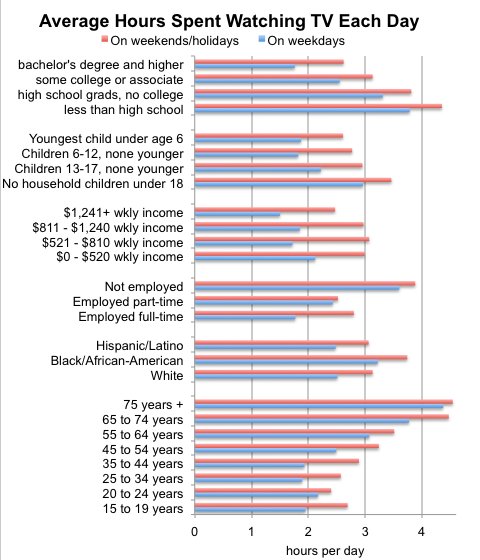
|