| In some countries, fortune-telling, Saju, and talismans are strictly prohibited by law. You need to be careful regarding these matters in such countries. 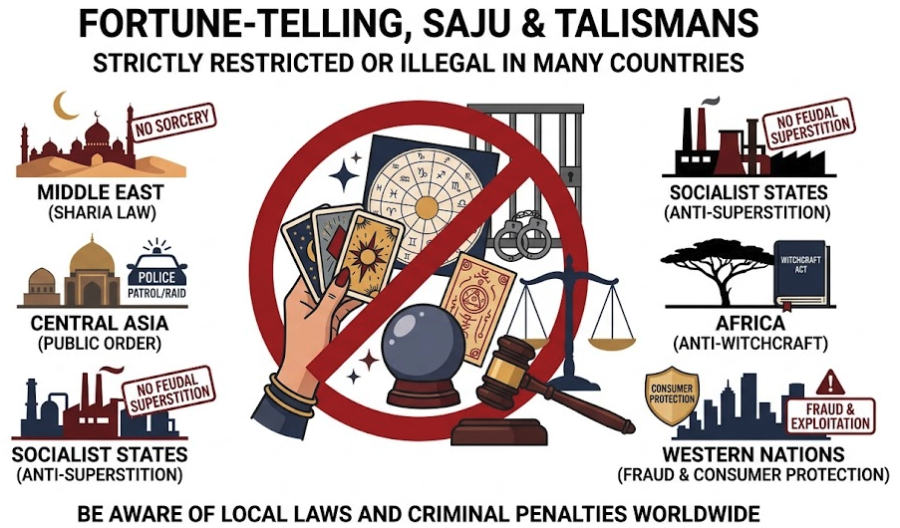
1. Middle Eastern Nations (Islamic Law / Sharia)In many Islamic nations, fortune-telling, astrology, and divination are strictly prohibited under Sharia law, as they are viewed as sorcery (sihr) or pretending to possess divine knowledge reserved only for God. - Saudi Arabia: The practice of fortune-telling, sorcery, and witchcraft is illegal and classified as a major crime. The Anti-Witchcraft Unit actively arrests practitioners. Penalties can range from long prison sentences and public flogging to capital punishment (execution).
- United Arab Emirates (UAE) & Qatar: Penal codes explicitly ban practicing sorcery, fortune-telling, and trickery to exploit others. Convictions result in heavy fines, imprisonment, and mandatory deportation for foreign nationals.
- Iran: Fortune-telling for commercial gain is criminalized under anti-fraud and religious disruption laws. Practitioners face arrest and imprisonment.
2. Central Asian Nations (State Enforcement & Public Order)Several Central Asian governments actively enforce bans on fortune-telling to curb fraud, secular disruption, and unapproved religious practices. - Tajikistan: Commercial fortune-telling and sorcery are strictly illegal. In recent years, the government has intensified crackdowns, conducting public raids. Penalties include administrative fines, forced labor, and up to seven years in prison for repeat offenders.
- Uzbekistan: The government penalizes unauthorized fortune-telling and occult practices under laws against fraudulent activities and illegal administrative services.
3. Socialist & Authoritarian States (Anti-Superstition Laws)In countries governed by socialist ideologies, fortune-telling is often officially categorized as "feudal superstition" that undermines state ideology and rationalism. - China: Article 27 of the Public Security Administration Punishment Law prohibits using "feudal superstition" to disturb public order or defraud people of money. While private interest persists, commercial fortune-telling—including online divination apps, fortune-telling shops, and feng shui consultancy for profit—is subject to police raids, fine enforcement, and account bans.
- North Korea: Practicing fortune-telling (jeom) for money or offline gatherings is classified as an "anti-socialist activity." Individuals caught practicing or consulting fortune-tellers face labor camp sentences or harsh state sanctions.
4. African Nations (Anti-Witchcraft and Fraud Prevention)Several African countries maintain specific statutory laws dating back to the colonial or post-independence eras designed to suppress witchcraft and commercial divination. - South Africa: The Witchcraft Suppression Act 3 of 1957 criminalizes anyone who, for gain, pretends to exercise supernatural powers, practice witchcraft, or tell fortunes.
- Uganda: The Witchcraft Act imposes criminal penalties on anyone who holds themselves out as a witch doctor or fortune-teller, or who practices divination for money.
- Zimbabwe: Under the Criminal Law Codification and Reform Act, charging money for fortune-telling or claiming the ability to use non-natural powers to cause harm or reveal secrets is illegal.
5. Western Legal Frameworks (Fraud & Consumer Protection)In most Western democracies, fortune-telling is generally permitted under freedom of speech regulations, but it is heavily restricted or penalized if conducted as a commercial fraud. - United States: While fortune-telling is largely protected by the First Amendment, dozens of local municipalities and states enforce strict regulations. Some cities require fortune-tellers to obtain expensive licenses, while others prosecute practitioners under deceptive business practices or anti-fraud laws if they promise specific outcomes (e.g., removing a curse for money).
- France: Until 1994, Article R34 of the French Penal Code explicitly criminalized commercial fortune-telling. Today, while the specific ban has been repealed, practicing fortune-telling to exploit vulnerable individuals is vigorously prosecuted under general *fraud laws (escroquerie).
- United Kingdom: The Fraudulent Mediums Act 1951 was repealed in 2008 and replaced by the Consumer Protection from Unfair Trading Regulations*. Fortune-tellers who claim guaranteed results or trick consumers into paying large sums face criminal prosecution for unfair commercial practices.
|