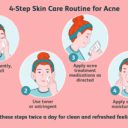
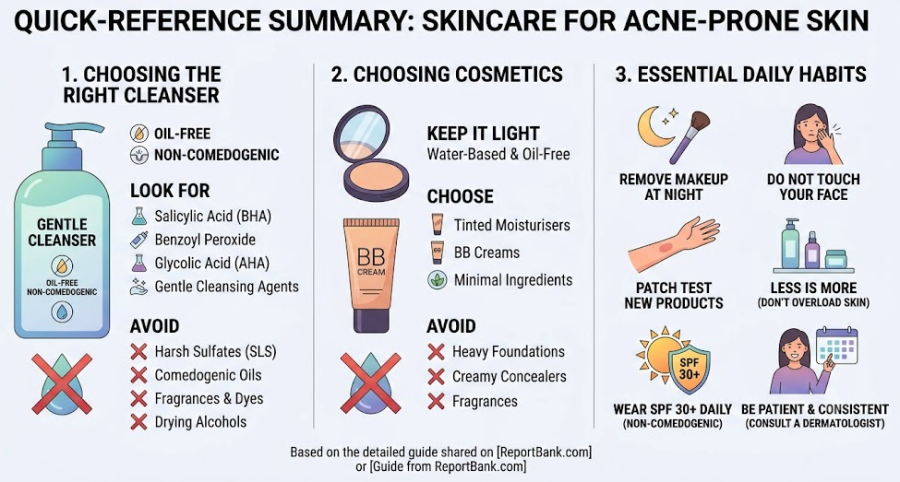
| Based on the detailed guide you shared, here is a quick-reference summary of the best practices for choosing and using cosmetics and cleansers for acne-prone skin: 1. Choosing the Right Cleanser- The Golden Rule: Choose gentle, oil-free, and non-comedogenic (won't clog pores) water-based cleansers. Avoid harsh scrubs and soaps that strip the skin's natural moisture barrier.
- Ingredients to LOOK FOR:
- Salicylic acid (BHA): Unclogs pores and exfoliates inside the pore.
- Benzoyl peroxide: Fights acne-causing bacteria (start with a low concentration).
- Glycolic acid (AHA): Exfoliates the skin surface to prevent dead skin buildup.
- Gentle cleansing agents: Look for coco-glucoside or sodium lauroyl sarcosinate.
- Ingredients to AVOID:
- Harsh sulfates like Sodium Lauryl Sulfate (SLS).
- Comedogenic oils (e.g., coconut oil, mineral oil).
- Fragrances, dyes, and drying alcohols (like isopropyl alcohol), which cause irritation.
2. Choosing Cosmetics- The Golden Rule: Keep it light. Look for products labeled non-comedogenic, oil-free, and water-based.
- What to Choose: Lightweight formulas like tinted moisturizers or BB creams with minimal ingredients.
- What to Avoid: Heavy foundations, creamy concealers, and highly fragranced makeup, which can trap bacteria and clog pores.
3. Essential Daily Habits- Always remove makeup thoroughly before going to bed.
- Do not touch your face to prevent spreading bacteria.
- Patch test any new product on a small area (like your inner arm) before applying it to your face.
- Less is more: Don't overload your skin with too many products at once, as this can trigger more acne.
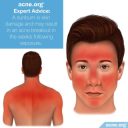
- Wear SPF 30+ daily: Choose a non-comedogenic sunscreen to protect your skin and prevent dark spots/scarring from acne.
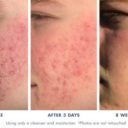
- Be patient and consistent: Skincare routines take time to show results. If your acne is severe or persistent, consult a dermatologist for a personalized plan.
|