| While popping or squeezing a blemish can offer temporary psychological satisfaction, the physical reality is highly damaging to the skin. What seems like a quick fix actually disrupts the skin's natural healing process, often exacerbating the very problem you are trying to solve. 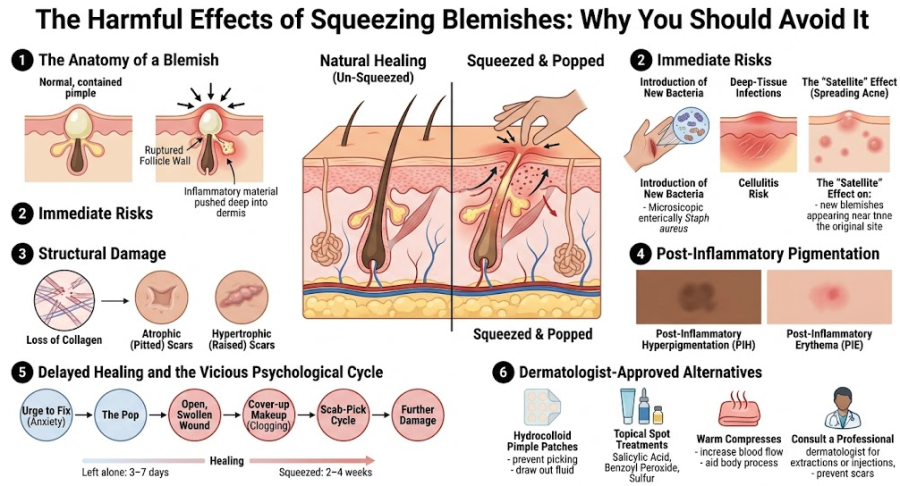
Below is an in-depth breakdown of why squeezing blemishes is counterproductive and how it impacts your skin health on a cellular and structural level.
1. The Anatomy of a Blemish: What Happens Beneath the SkinTo understand why squeezing is harmful, it is essential to understand what a blemish is. A pimple is a small, inflamed hair follicle (pore) clogged with a combination of excess sebum (oil), dead skin cells, and bacteria (Cutibacterium acnes). When a blemish forms, the body's immune system sends white blood cells to fight the bacteria, creating a localized pocket of inflammation. This pocket is safely contained by the walls of the pore. When you squeeze a blemish, you apply intense downward and lateral pressure. Instead of pushing the blockage upward and out, this pressure often ruptures the delicate follicle wall beneath the surface of the skin. This forces the highly inflammatory mixture of bacteria, sebum, and dead skin cells deep into the surrounding dermis (the lower layer of skin), leading to severe complications. 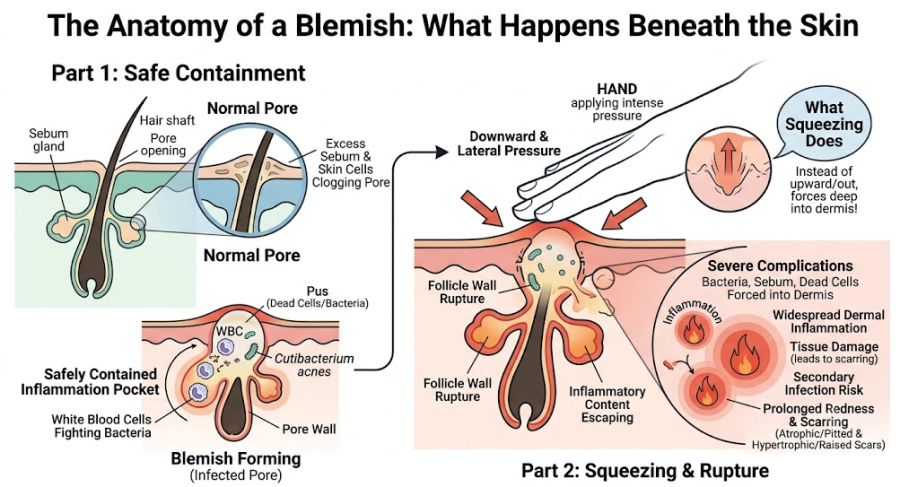
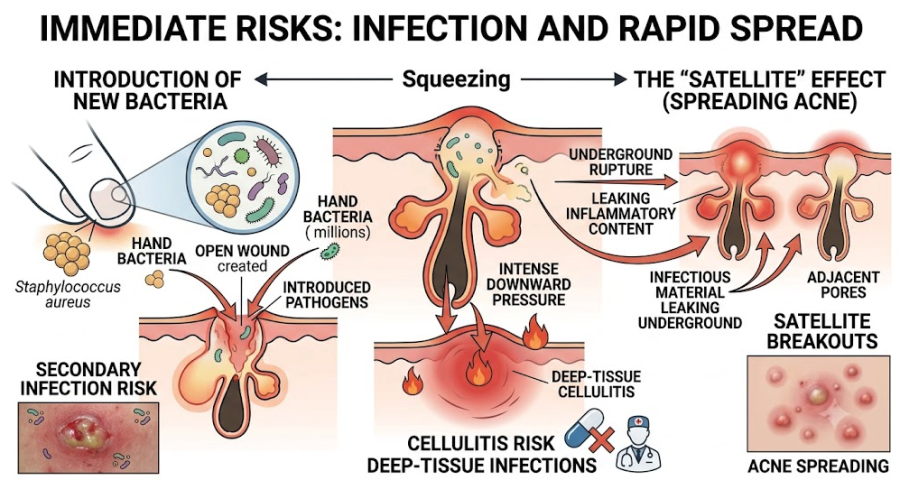
2. Immediate Risks: Infection and Rapid SpreadSqueezing a blemish creates an open wound, making your skin highly vulnerable to external pathogens. - Introduction of New Bacteria: Your hands and fingernails harbor millions of microscopic bacteria, including Staphylococcus aureus. When you pop a pimple, you introduce these foreign bacteria into the newly opened wound, which can lead to secondary infections.
- Deep-Tissue Infections: In severe cases, squeezing can push bacteria so deep into the skin tissue that it causes cellulitis, a painful bacterial skin infection that requires medical intervention.
- The "Satellite" Effect (Spreading Acne): When the follicle wall ruptures underground, the infectious material leaks into adjacent pores. This frequently triggers new breakouts directly next to the original blemish, causing acne to spread rather than resolve.
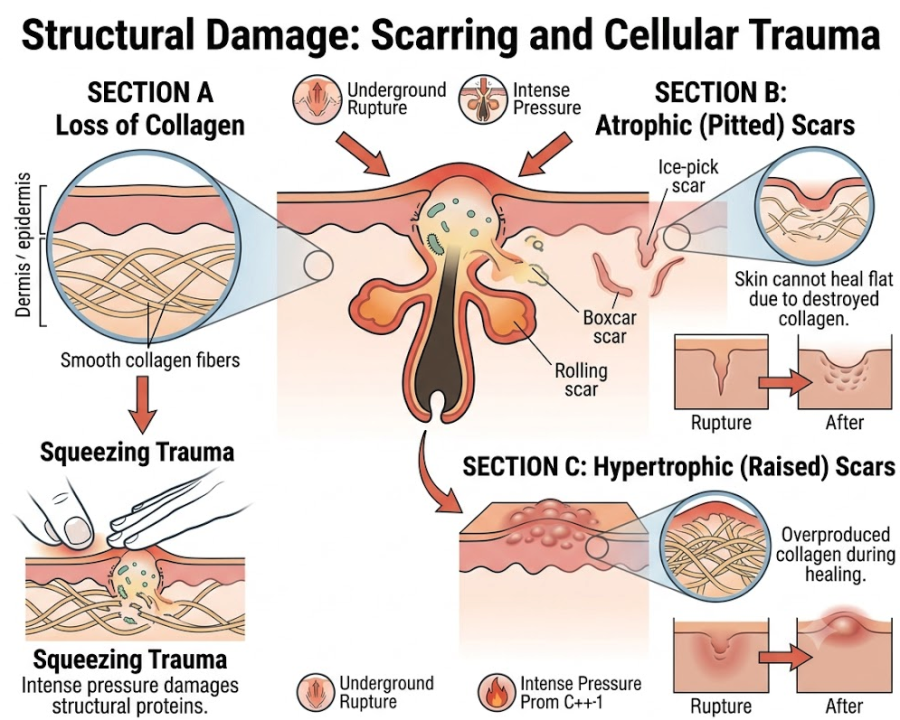
3. Structural Damage: Scarring and Cellular TraumaThe physical trauma of squeezing can permanently alter the structure of your skin. This is particularly true for deep-seated blemishes like cysts or nodules, which do not have a "head" near the surface. - Loss of Collagen: The intense pressure of squeezing damages the surrounding collagen fibers—the structural proteins that keep skin firm and smooth.
- Atrophic (Pitted) Scars: If collagen is destroyed during the popping process, the skin cannot heal flat. It sinks, leaving behind permanent pitted scars, known as "ice-pick," "boxcar," or "rolling" scars.
- Hypertrophic (Raised) Scars: Conversely, the body may overproduce collagen during the chaotic healing process of a popped pimple, resulting in raised, bumpy scars.
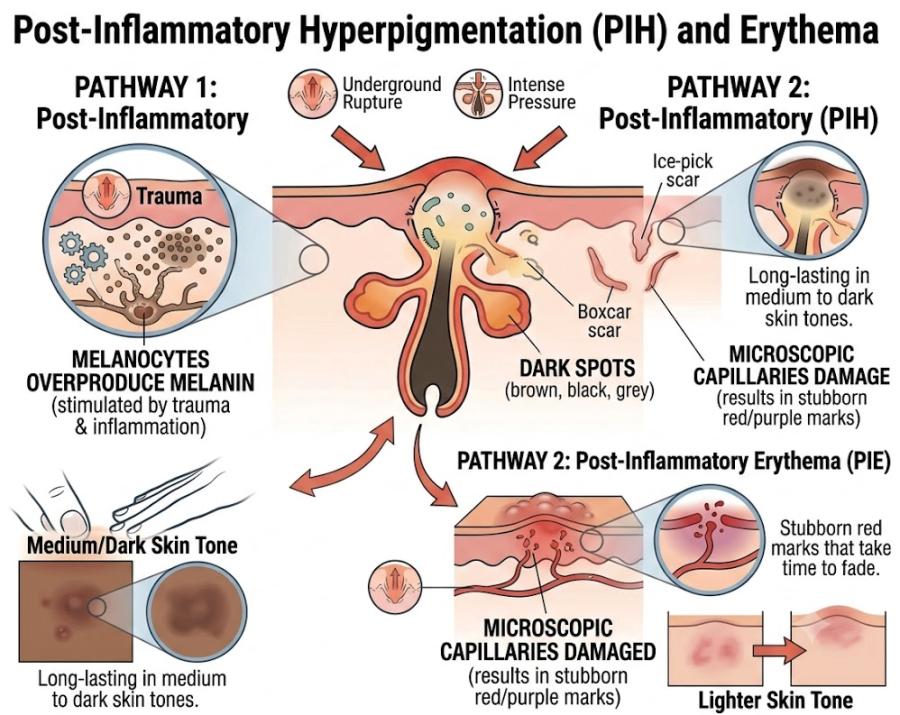
4. Post-Inflammatory Hyperpigmentation (PIH) and ErythemaEven if a popped blemish does not leave a physical scar, it almost always leaves a color mark that can last for months or even years. - Post-Inflammatory Hyperpigmentation (PIH): The trauma and inflammation of squeezing stimulate melanocytes (the cells responsible for skin pigment) to overproduce melanin. This leaves behind a dark brown, black, or grey spot. PIH is particularly common and long-lasting in medium to dark skin tones.
- Post-Inflammatory Erythema (PIE): In lighter skin tones, squeezing damages the microscopic capillaries near the skin's surface. This results in stubborn red, pink, or purple marks that take a long time to fade.
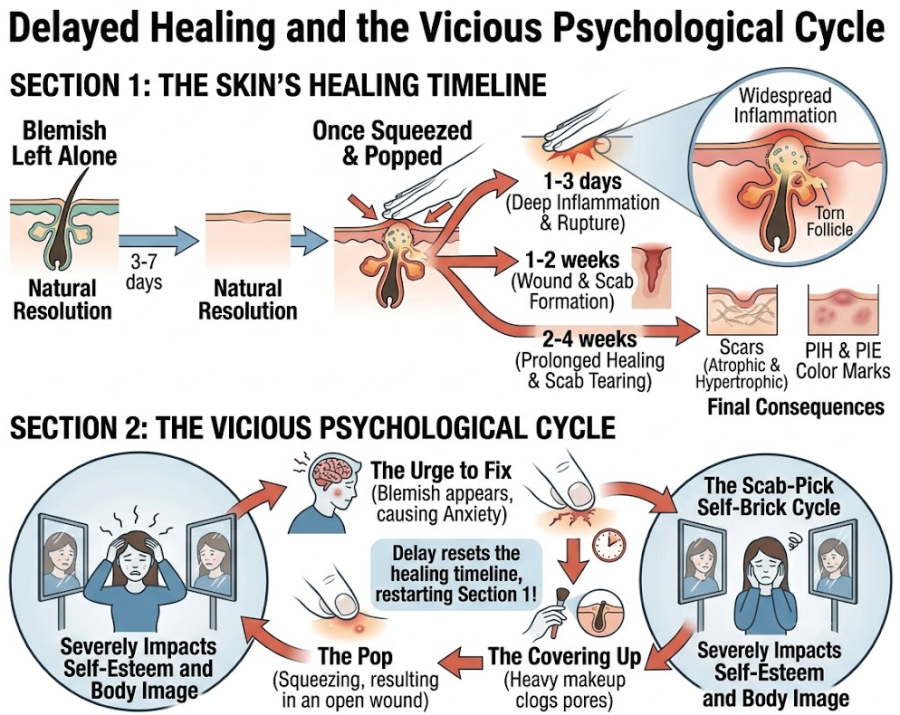
5. Delayed Healing and the Vicious Psychological CycleSqueezing resets the skin's natural healing timeline. A blemish left alone will typically resolve within 3 to 7 days. Once squeezed and popped, the resulting wound, scab, and deep-tissue inflammation can take 2 to 4 weeks to fully heal. Furthermore, this delay triggers a psychological cycle: - The Urge to Fix: A blemish appears, causing anxiety.
- The Pop: Squeezing occurs, resulting in an open, red, and swollen wound.
- The Covering Up: To hide the raw wound, heavy makeup is often applied, which clogs the pore further.
- The Scab-Pick Cycle: As the wound scabs over, the urge to pick at the dry skin leads to further tearing and delayed healing, severely impacting self-esteem and body image.
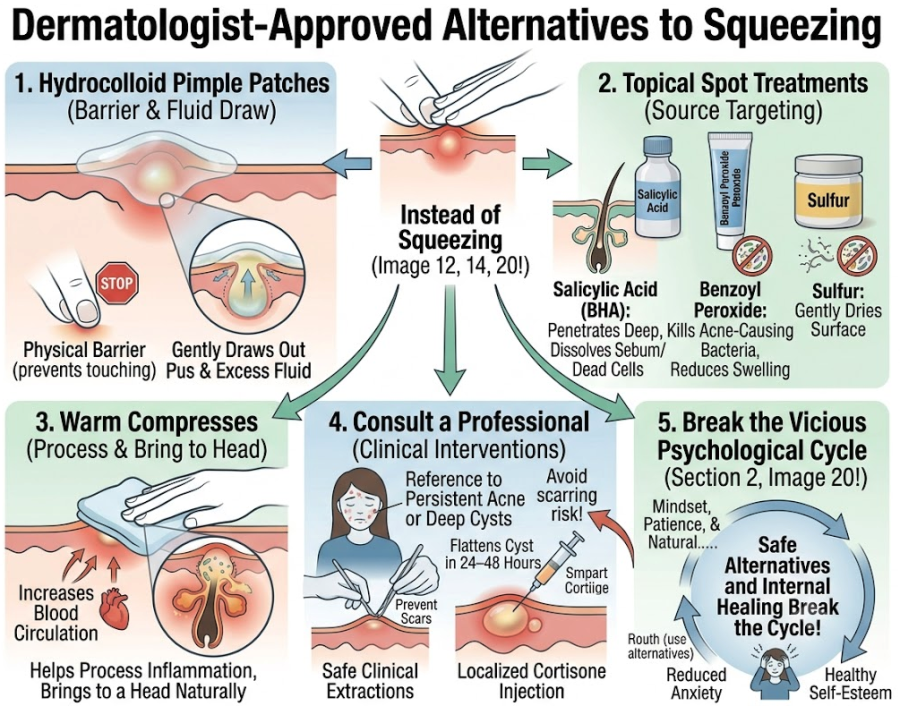
6. Dermatologist-Approved Alternatives to SqueezingInstead of picking and squeezing, you can manage breakouts safely using targeted, non-invasive treatments: - Hydrocolloid Pimple Patches: These clear, adhesive patches act as a physical barrier that prevents you from touching or picking the blemish. They gently draw out pus and excess fluid without damaging the skin barrier.
- Topical Spot Treatments: Apply ingredients that target acne at its source:
- Salicylic Acid (BHA): Penetrates deep into pores to dissolve sebum and dead skin cells.
- Benzoyl Peroxide: Kills acne-causing bacteria and reduces swelling.
- Sulfur: Gently dries out the surface of the blemish.
- Warm Compresses: If a blemish is painful and deep, apply a clean, warm, damp washcloth for 5–10 minutes. This increases blood circulation to the area, helping the body process the inflammation and bringing the blemish to a head naturally.
- Consult a Professional: For persistent acne or deep, painful cysts, consult a board-certified dermatologist. They can perform safe clinical extractions or administer a localized cortisone injection, which flatters a painful cyst within 24 to 48 hours without risking scars.
Tags: Acne Acne Treatment Avoid Squeezing Blemishes Non Invasive Care Skin Damage Squeezing Blemishes  
|
 1,713
1,713  0
0  0
0 
 3370
3370