Although Mounjaro 2.5 mg is an initial adjustment phase, gastrointestinal side effects such as diarrhea and vomiting commonly appear starting from the second week as the drug concentration accumulates in the body. If your current symptoms do not significantly interfere with your daily life, you may proceed with the third scheduled injection while consuming sufficient fluids and electrolytes to prevent dehydration and continue monitoring your condition. However, if vomiting or diarrhea worsens after the third dose, or if you experience severe abdominal pain or persistent symptoms of dehydration, it is recommended that you stop further injections immediately and visit your prescribing clinic to receive professional medical consultation and appropriate symptomatic treatment.
1. Causes of Week 2 Gastrointestinal Side Effects
Drug Concentration Accumulation (Steady-State Building)
Pharmacokinetics: Tirzepatide (Mounjaro) has an elimination half-life of approximately 5 days (120 hours).
Cumulative Effect: When the second dose is administered on Day 7, a significant portion of the first dose remains in the bloodstream. This leads to higher peak blood levels (Cmax) after the second dose compared to the first.
Delayed Onset: Because blood concentration peaks between 24 to 48 hours post-injection, side effects often surge around Week 2 rather than Week 1.
Dual GIP/GLP-1 Receptor Agonism: Tirzepatide activates both glucose-dependent insulinotropic polypeptide (GIP) and glucagon-like peptide-1 (GLP-1) receptors.
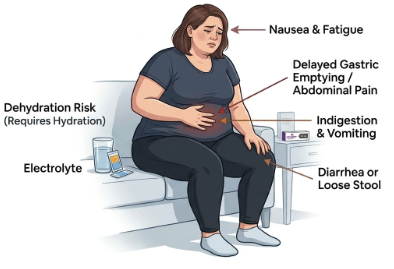
Delayed Gastric Emptying: The medication significantly slows down the rate at which the stomach empties its contents into the small intestine. This delayed transit can lead to early satiety, stomach distension, acid reflux, nausea, vomiting, and altered bowel movements (diarrhea or constipation).
Central Nervous System Activation: GLP-1 receptors in the brain stem (specifically the area postrema) directly influence nausea and appetite centers. As the body calibrates to these signals, transient gastrointestinal distress is a common physiological response.
2. Decision Criteria for the 3rd Dose Injection (Scheduled Day)
If current symptoms are mild to moderate and manageable, evaluate your condition using the following clinical scenarios before administering the 3rd dose.
Scenario A: Symptoms Fully Resolved by the Scheduled Day
Action: Administer the 3rd dose (2.5mg) as scheduled.
Clinical Rationale: Resolution of symptoms indicates that the gastrointestinal tract and central nervous system are successfully adapting to the current drug concentration.
Scenario B: Persistent Mild-to-Moderate Diarrhea or Nausea
Action:Delay the injection by 1 to 2 days.
Next Steps: Contact the prescribing clinic or physician on the next business day for advice before proceeding with the dose.
Clinical Rationale: Tirzepatide allows for flexible dosing schedules. The dose can be delayed by up to 4 days past the scheduled injection date without losing therapeutic continuity or requiring a restart of the dose-escalation schedule. Allowing an extra 24–48 hours helps blood concentration decrease slightly, giving the stomach time to recover.
Scenario C: Worsening Symptoms or Severe Gastrointestinal Distress
Action:Do NOT administer the 3rd dose.
Next Steps: Seek immediate medical evaluation.
Clinical Rationale: Administering an additional dose while experiencing active, severe side effects exacerbates the risk of profound dehydration, electrolyte imbalance, and potential complications.
3. Self-Care Protocols for Side Effect Relief
Advanced Hydration and Electrolyte Management
Preventing Dehydration: Diarrhea and vomiting lead to significant fluid and solute loss. Drinking plain water in large quantities can dilute sodium levels (hyponatremia); opt for Oral Rehydration Solutions (ORS) or low-sugar electrolyte/isotonic drinks.
Administration Technique: Take small, frequent sips throughout the day rather than chugging large amounts at once, which can trigger the stretch receptors in the stomach and provoke vomiting.
Dietary Adjustments
Dietary Content: Transition to a soft, low-fat, low-residue diet (e.g., BRAT diet: Bananas, Rice, Applesauce, Toast, or light porridge/congee).
Foods to Avoid:
High-fat and fried foods (further delay gastric emptying and trigger nausea).
Spicy, heavily seasoned, or acidic foods (irritate stomach lining).
Carbonated beverages, caffeine, and artificial sweeteners (exacerbate diarrhea and gas formation).
Portion Control: Eat small meals 5 to 6 times a day instead of 2 to 3 larger meals to reduce mechanical burden on the stomach.
Post-Meal Habits & Lifestyle Modifications
Upright Posture: Remain sitting upright or standing for at least 2 to 3 hours after eating. Avoid lying flat or bending over to reduce gastroesophageal reflux and nausea.
Abdominal Comfort: Wear loose-fitting clothing around the waist to minimize intra-abdominal pressure.
4. Red Flag Symptoms Requiring Immediate Medical Attention
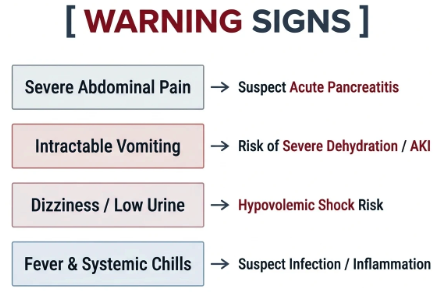
If any of the following warning signs occur, withhold the 3rd injection immediately and visit an emergency department or your prescribing specialist.
Severe Upper Abdominal or Back Pain: Sharp, severe epigastric pain that radiates to the back (often worsening when lying down and slightly improving when leaning forward) is a classic indicator of acute pancreatitis, a rare but serious potential complication of GLP-1/GIP therapies.
Intractable Vomiting or Uncontrolled Diarrhea: Inability to retain fluids for more than 24 hours prevents adequate rehydration and requires intravenous fluid therapy.
Signs of Severe Dehydration & Acute Kidney Injury (AKI):
Persistent dizziness, lightheadedness, or confusion.
Significant reduction in urine output, or dark-colored/concentrated urine.
Excessive dryness of the mouth, sunken eyes, or loss of skin turgor.
Systemic Symptoms: High fever, chills, or bloody stools/vomit, which warrant urgent diagnostic evaluation to rule out gastrointestinal bleeding or systemic infection.