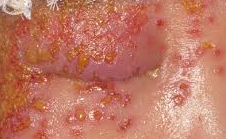
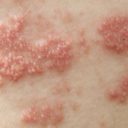
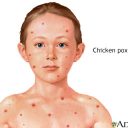
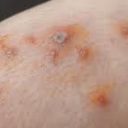
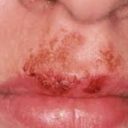
| Impetigo is a highly contagious bacterial skin infection, most commonly caused by *Staphylococcus aureus* or *Streptococcus pyogenes*, characterized by sores that rupture, forming a honey-colored crust. It primarily affects infants and children, often appearing on the face, hands, and diaper area. Treatment usually involves topical antibiotics, though oral antibiotics may be necessary for severe cases. Good hygiene practices, such as handwashing and avoiding contact with infected individuals, are crucial in preventing its spread. 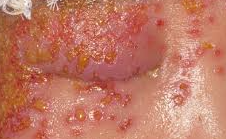
Impetigo is a highly contagious bacterial skin infection that mainly affects infants and children. It's characterized by sores that break open, ooze fluid, and then crust over. There are two main types:
- Non-bullous impetigo: This is the most common type. It starts as small, red sores that quickly rupture, forming a honey-colored crust. It usually affects the face, arms, and legs.
- Bullous impetigo: This type produces fluid-filled blisters (bullae) that are larger than those in non-bullous impetigo. These blisters break open, leaving a thin, brown crust.
Causes: Impetigo is most often caused by two bacteria: Staphylococcus aureus and Streptococcus pyogenes. These bacteria typically enter the body through a break in the skin, such as a scratch or insect bite. The infection spreads easily through direct contact with an infected person or contaminated objects.
Symptoms: The key symptoms include:
- Red sores that quickly rupture
- Honey-colored crusts (non-bullous)
- Fluid-filled blisters (bullous)
- Itching
- Swelling
- Pain (sometimes)
Treatment: Impetigo is usually treated with topical antibiotics (creams or ointments) applied directly to the sores. In more severe cases, oral antibiotics may be prescribed. Good hygiene practices, such as frequent handwashing and keeping the affected area clean and dry, are crucial to prevent the spread of the infection.
Complications: While generally not serious, impetigo can sometimes lead to complications like: - Cellulitis (a deeper skin infection)
- Lymphadenitis (swollen lymph nodes)
- Post-streptococcal glomerulonephritis (kidney inflammation, though rare)
Prevention: Good hygiene is key to preventing impetigo. This includes: - Frequent handwashing
- Avoiding touching sores
- Keeping wounds clean and covered
- Not sharing towels or personal items
If you suspect your child or yourself has impetigo, it's important to consult a doctor for diagnosis and treatment. Early treatment helps prevent the spread of the infection and reduces the risk of complications.
|