| Copyright protection automatically applies to original works of authorship fixed in a tangible medium of expression, such as writings, music, art, and software, from the moment they are created. This means you don't need to register your work with a copyright office to be protected, though registration offers additional benefits like the ability to sue for infringement. However, copyright only protects the expression of an idea, not the idea itself, and works that lack originality or are in the public domain are not protected. 
Copyright protection automatically applies to original works of authorship the moment they are fixed in a tangible medium of expression. This means your work is protected as soon as it's written down, recorded, filmed, or otherwise preserved in a way that can be perceived, reproduced, or communicated. You don't need to register your work with a copyright office to have protection, though registration offers several important advantages (discussed below).
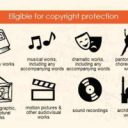
Here's a breakdown of what's covered:What is Protected:- Literary works: Books, poems, articles, computer code, screenplays.
- Musical works: Songs, instrumental compositions, musical arrangements.
- Dramatic works: Plays, musicals, screenplays.
- Pantomimes and choreographic works: Dances, ballets.
- Pictorial, graphic, and sculptural works: Paintings, drawings, photographs, sculptures, graphic designs, architectural works.
- Motion pictures and other audiovisual works: Films, videos, animations.
- Sound recordings: Recordings of musical performances, spoken word recordings.
- Architectural works: The design of buildings.
What is NOT Protected:- Ideas, concepts, procedures, methods, systems, processes, discoveries, principles, or devices, as distinct from a description, explanation, or illustration. You can't copyright the idea of a story; you can copyright the specific expression of that story in written form.
- Works that are not fixed in a tangible medium of expression. A fleeting thought, an unrecorded improvisation, or a performance not captured on video or audio are not protected.
- Works in the public domain: Works whose copyright has expired or that were never protected.
- Titles and short phrases: These are generally too short to be protected.
- Facts: You can't copyright facts, but you can copyright the way you express those facts (e.g., you can't copyright the fact that the Earth is round, but you can copyright your specific book explaining that fact).
- Works of the U.S. Government: Unless created by a government employee as part of their official duties but not part of their work for hire agreement.
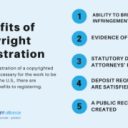
The Benefits of Copyright Registration (in the US):While automatic protection exists, registering your work with the U.S. Copyright Office provides significant advantages:- Legal standing: Registration establishes a public record of your claim to ownership, making it easier to sue for infringement.
- Statutory damages: In the event of infringement, registered works allow you to recover statutory damages (fixed amounts) and attorney's fees, even if actual damages are difficult to prove. Unregistered works only allow for actual damages.
- Prima facie evidence: A certificate of registration serves as prima facie evidence of ownership, making it easier to prove your case in court.
In summary: Understanding what is and isn't protected by copyright is crucial for creators. While automatic protection exists, registration offers substantial benefits for securing and enforcing your rights. For specific legal advice, always consult with an intellectual property attorney.
|