| The "Poor Man's Copyright," a misguided attempt to protect intellectual property by mailing a work to oneself, lacks legal standing. This creative journey through time reveals the persistent desire for copyright protection among those lacking the resources for formal registration. Despite its inherent flaws—easily circumvented and lacking evidentiary weight—the practice highlights the ongoing tension between access to legal protections and the practical realities faced by artists and creators of limited means, ultimately showcasing a persistent struggle for equitable ownership and recognition within the framework of intellectual property law. 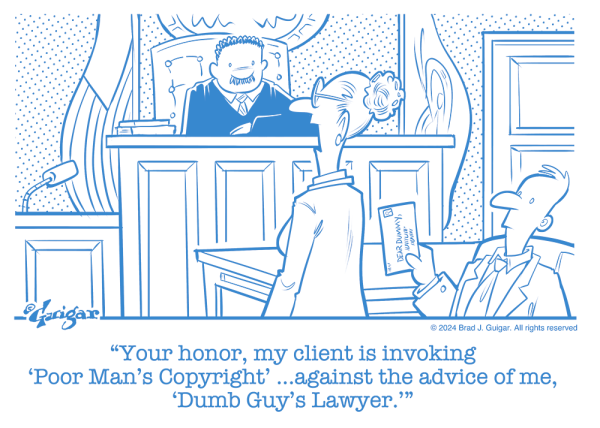
The Curious Case of the Poor Man's Copyright – A Creative Journey Through TimeThe phrase "poor man's copyright" evokes a romantic, if ultimately flawed, image: a scrappy artist, lacking the resources for formal copyright protection, desperately trying to safeguard their creation. This journey through time explores the myth and reality of this concept, revealing its limitations and the evolving landscape of intellectual property. The Early Days: A Wild West of IdeasBefore the formalization of copyright laws, the concept of "poor man's copyright" was essentially a collection of ad-hoc methods, born out of necessity. These methods varied wildly, but often involved: - Witnessing and notarization: The creator would have witnesses attest to their authorship, often with notarized documentation, attempting to establish a chain of provenance. This was cumbersome, expensive (relatively), and often ineffective in court, as proving prior creation still rested on the burden of proof on the artist.
- Registered mail: Sending a sealed copy of the work to themselves, then opening it in court, was another tactic, aiming to prove prior existence. This too had serious weaknesses, particularly concerning the authenticity of the sealed package.
- Publication with a clear copyright notice: While not a "poor man's" method per se, early forms of copyright focused on published works. If an artist could afford publication, even on a small scale, it served as a stronger claim.
The Limitations:These "poor man's copyright" methods consistently suffered from several critical flaws: - Burden of Proof: The creator had the nearly impossible task of proving they were the original author, often against a much wealthier opponent with better legal resources.
- Lack of Legal Standing: These methods lacked the weight of law; courts rarely recognized them as legally binding copyright protection. They were more akin to circumstantial evidence than actual protection.
- Geographic Limitations: Protection was almost always limited to the geographic area where the "poor man's copyright" action occurred. Infringement outside that area was virtually impossible to prevent.
The Evolution of Copyright Law:The rise of modern copyright law largely rendered the "poor man's copyright" obsolete. The creation of national and international copyright offices simplified and standardized the process of securing copyright protection, making it accessible (though still potentially costly) to a far wider range of creators.
The Modern Echoes: While largely irrelevant legally, the spirit of the "poor man's copyright" persists. We see it in the anxieties of independent artists navigating the complexities of intellectual property, the ongoing debate about fair use and creative commons licenses, and the discussions surrounding digital copyright and the ease of content replication. Conclusion:The "poor man's copyright" represents a fascinating historical artifact, highlighting the tension between creative expression and the legal frameworks designed to protect it. Its story is a reminder of the continuous evolution of copyright law, and the ongoing struggle to balance the rights of creators with the needs of a dynamic and rapidly changing information landscape. It emphasizes that while informal methods might offer a sense of security, formal copyright registration remains the most reliable path for protecting creative work.
|