Founding and Early DaysOpenAI was founded in December 2015 in San Francisco, California, by a group of prominent tech figures including Sam Altman, Elon Musk, Greg Brockman, Ilya Sutskever, Wojciech Zaremba, and John Schulman. 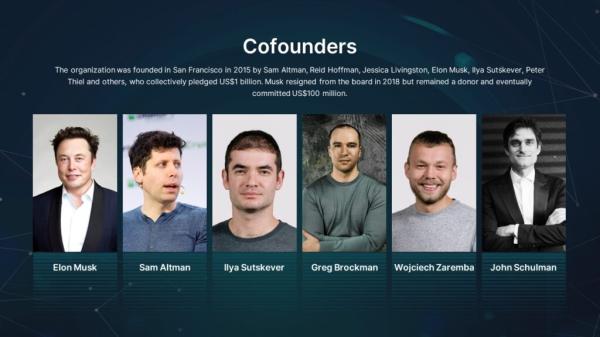
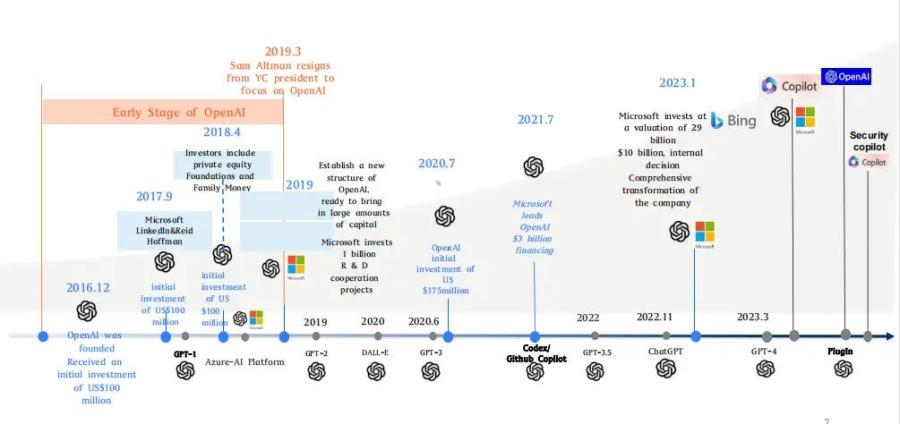
The primary motivation behind its establishment was to advance digital intelligence in the way that is most likely to benefit humanity as a whole, unconstrained by a need to generate financial return. The founders were driven by concerns about the potential existential risks of advanced artificial intelligence if developed without proper safeguards or by entities with misaligned incentives. They aimed to democratize AI, ensure its safety, and prevent a dystopian future where powerful AI is concentrated in the hands of a few. Initially, OpenAI was structured as a nonprofit organization. Funding Story and EvolutionOpenAI initially launched with a commitment of $1 billion from a range of benefactors, including Elon Musk, Sam Altman, Reid Hoffman, Peter Thiel, Amazon Web Services (AWS), Infosys, and YC Research. OpenAI intended these funds to support long-term research, free from the immediate pressures of commercialization. However, as the complexity and computational demands of advanced AI research grew exponentially, it became clear that the nonprofit structure alone would not be sufficient to attract the enormous capital required to compete with large tech companies. In 2019, OpenAI transitioned to a new "capped-profit" model, forming OpenAI LP as a separate entity beneath the nonprofit OpenAI Inc. This unique structure allowed them to raise significant investment capital while still adhering to their core mission by capping the returns for investors (e.g., 100x the investment, depending on the tier). This move was crucial for securing the massive computing resources and top-tier talent needed for developing large-scale AI models. Shortly after this transition, Microsoft made a $1 billion investment in OpenAI, followed by further substantial investments in subsequent years, solidifying a strategic partnership that provided OpenAI with access to Microsoft's Azure cloud computing infrastructure. First MVPs and Early ResearchOpenAI's early work focused on foundational research in areas like reinforcement learning and robotics. While they didn't have a traditional "product" MVP in the commercial sense initially, several key releases served as foundational "minimal viable products" for the research community and demonstrated their capabilities: - OpenAI Gym (2016): An open-source toolkit for developing and comparing reinforcement learning algorithms. It provided a standardized set of environments (like Atari games or simulated physics tasks) to test and benchmark AI agents. This was a crucial "MVP" for accelerating AI research externally.
- OpenAI Universe (2016): A software platform that allows an AI agent to use a computer like a human, control a web browser, or play games, offering a vast array of environments for general AI training.
- GPT-1 (Generative Pre-trained Transformer 1) (June 2018): This was arguably OpenAI's first major public "MVP" in the field of large language models. It showed how effective the Transformer architecture could be when it learned from a large amount of text without supervision, and then was adjusted for different language tasks. It showed the potential for a single model to perform well on diverse language tasks.
- Dota 2 AI (OpenAI Five) (2018): OpenAI developed an AI that could defeat professional human players in the complex real-time strategy game Dota 2. This showcased their prowess in reinforcement learning at a grand scale.
Obstacles FacedOpenAI encountered several significant obstacles throughout its journey: - Massive Computational Costs: Training state-of-the-art AI models, especially large language models, requires extraordinary amounts of computational power, which translates into immense financial costs.
- Intense Talent Competition: The field of AI is highly competitive, with large tech companies offering lucrative packages to attract top researchers and engineers. OpenAI needed to find ways to attract and retain the best minds.
- Balancing "Openness" with Safety: As their models became more powerful, OpenAI grappled with the dilemma of its "open" philosophy versus the potential for misuse and safety concerns. This was particularly evident with the release of GPT-2, where they initially withheld the full model due to concerns about its potential for generating deceptive text.
- Ethical and Safety Challenges: Developing powerful general AI raises profound ethical questions and potential safety risks, requiring constant research into alignment, bias, and responsible deployment.
- Leadership and Direction: Internal dynamics and leadership changes, such as Elon Musk's departure from the board in 2018, posed challenges in maintaining a unified vision and strategy.
Overcoming ObstaclesOpenAI successfully navigated these challenges through a combination of strategic decisions and innovative approaches: - Innovative Funding Model: The transition to the "capped-profit" entity was a crucial step, allowing them to raise the multi-billion dollar investments necessary to fund their computational needs without fully abandoning their non-profit mission.
- Strategic Partnerships: The deep partnership with Microsoft provided not only significant financial investment but also critical access to vast cloud computing resources (Azure AI supercomputer) and distribution channels, which were essential for training and deploying their increasingly large models.
- Focus on Cutting-Edge Research: By consistently pushing the boundaries of AI research, particularly in areas like large language models and generative AI, OpenAI created a stimulating environment that attracted top talent despite competitive offers elsewhere.
- Iterative and Controlled Releases: For powerful models like GPT-2 and subsequent versions, OpenAI adopted a more cautious, iterative release strategy. This involved releasing smaller versions first, conducting extensive research on potential misuse, and engaging with the broader AI community before making full models or APIs available, balancing openness with responsibility.
- Cultivating a Unique Culture: OpenAI fostered a research-first culture focused on long-term goals and societal benefit, which helped attract individuals deeply committed to the mission of safe and beneficial AI.
- Developer Ecosystem: By releasing APIs (Application Programming Interfaces) for their models, OpenAI enabled a vast ecosystem of developers and businesses to integrate their AI into diverse applications, effectively distributing the benefits of their research and generating revenue to sustain further development.
The Divergence of Elon Musk and Sam Altman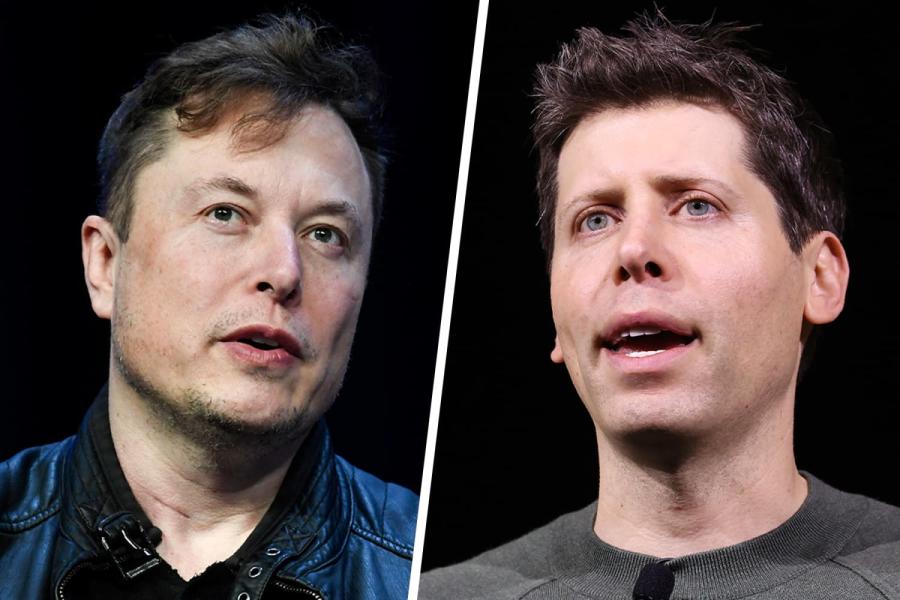
I. Shared Origins: The Founding of OpenAIElon Musk and Sam Altman were key figures in the founding of OpenAI in December 2015. Deep concern about the potential existential risks of artificial general intelligence (AGI) drove their shared vision at the time. - Initial Mission: OpenAI was established as a non-profit research company dedicated to ensuring that AGI, when it arrived, would benefit all of humanity and not be controlled by a single corporation or government. They aimed to avert a future where a select few would hold powerful AI in secret.
- Early Contributions: Musk was a significant early donor, contributing $100 million, and served as a co-chair on the board. Altman was also a co-founder and later became CEO. Both were united by the belief that AI should be developed openly and safely.
II. The Ideological Rift and Musk's DepartureThe initial unity began to fray as OpenAI faced the immense financial and talent demands of developing cutting-edge AI. This led to a fundamental disagreement over the organization's structure and direction. - Financial Pressures: Developing AGI requires astronomical computing power, vast datasets, and the world's top AI researchers—resources that a purely non-profit model struggled to sustain for rapid progress.
- Musk's Desire for Control: Reports suggest Musk sought to take full control of OpenAI in 2018, proposing to merge it with Tesla or lead it himself. Tensions escalated when the other founders, including Altman, rejected Musk's proposal due to concerns about his existing commitments and potential conflicts of interest.
- Musk's Departure (2018): Elon Musk resigned from OpenAI's board in February 2018. While officially citing potential conflicts of interest with Tesla's AI efforts, it is widely believed his departure was primarily driven by his growing dissatisfaction with OpenAI's trajectory and the rejection of his leadership proposal.
- Shift to "Capped-Profit" (2019): Following Musk's departure, OpenAI restructured to create a "capped-profit" subsidiary. This allowed them to raise billions in investment (most notably from Microsoft, starting in 2019) to compete with tech giants for talent and resources, while theoretically keeping the non-profit board in control of the mission. This move was a major point of contention for Musk, who viewed it as a betrayal of the original non-profit, open-source mission.
III. Escalation of Criticisms and Competitive VenturesPost-2018, the relationship deteriorated into public criticism and direct competition. - Musk's Public Accusations: Musk frequently criticized OpenAI, particularly after the Microsoft investment. He accused the company of becoming a “closed-source, for-profit company effectively controlled by Microsoft” and of abandoning its founding mission to benefit humanity in favor of profit. He often highlighted the irony of a company named "OpenAI" becoming increasingly closed with its advanced models.
- OpenAI's Justification: OpenAI countered that the "capped-profit" model and partnerships were necessary to achieve their mission effectively, arguing that without significant funding, they couldn't possibly develop AGI safely or compete with better-funded corporations. They maintained that the nonprofit parent company retained control over the for-profit entity's mission.
- Founding of xAI (2023): In July 2023, Elon Musk launched his AI company, xAI, explicitly stating its goal to "understand the true nature of the universe" and develop AGI in a way that is "maximalist truth-seeking." Many view xAI as a direct competitor to OpenAI, demonstrating Musk's conviction in developing AI in a more responsible and effective manner.
- Lawsuit Against OpenAI (March 2024): Musk escalated the conflict by filing a lawsuit against OpenAI, Sam Altman, and Greg Brockman. The lawsuit alleges breach of contract, claiming OpenAI violated its founding agreement to develop AGI for the benefit of humanity by prioritizing profit and secrecy, especially through its partnership with Microsoft and the closed-source nature of models like GPT-4. OpenAI responded by publishing emails from Musk, attempting to show that he was aware of and supported the move towards a for-profit structure and even attempted to gain control of the company himself.
IV. Core Disagreements and Future ImplicationsThe animosity stems from fundamental differences in ideology, trust, and approach to AI development. - Open vs. Closed AI: Musk advocates for open-source AI to ensure transparency and broad access, while OpenAI, particularly with its advanced models, has moved towards closed-source development for safety, competitive advantage, and commercialization.
- Profit vs. Philanthropy: Musk believes OpenAI has betrayed its philanthropic roots for profit, whereas OpenAI argues profit is a necessary means to fund the incredibly expensive pursuit of safe AGI.
- Control and Governance: There's a deep disagreement over who should control the most powerful AI systems and how their development should be governed. Musk appears to distrust OpenAI's current leadership and corporate structure.
- AI Safety Approaches: While both express concern for AI safety, their approaches differ. Musk believes OpenAI's commercialization makes it inherently less safe, while OpenAI likely believes its current path is the most viable for responsible AGI development.
The feud between Musk and Altman represents a significant ideological battle within the AI community, influencing public discourse and shaping the competitive landscape of artificial intelligence development.
Tags: AWS Breakthroughs Elon Musk Funding Greg Brockman Ilya Sutskever John Schulman OpenAI OpenAI History Sam Altman Wojciech Zaremba YC Research xAI  
|
 180
180  0
0  0
0 
 3354
3354