People think they'll live forever. They won't. Life is short. Don't waste it.
- Insights Brian Halligan, HubSpot Co-founder, realized after falling off a cliff. 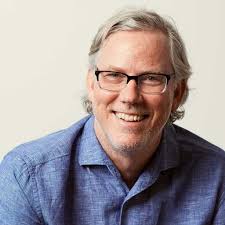
Brian Halligan, co-founder of HubSpot, who served as CEO for 20 years and now works as an in-house CEO coach for Sequoia Capital, recently appeared on Lenny Rachitsky's podcast. During the interview, he candidly shared his observations on the differences between 'growing CEOs' and 'stagnant CEOs', based on coaching dozens of top executives. The Evolving Role of a CEO1. When a Company Grows, the CEO's Job Becomes 'Hiring' - Halligan categorizes the CEOs he coaches into the "Kids Table" (under 100 employees) and "Adult Table" (over 100 employees). CEOs at the "Adult Table" have one primary focus: executive hiring.
- They report spending roughly half their working hours on interviews and reference checks. While many aspire to a CEO role expecting to paint the "big picture," the reality often involves being a relentless interviewer.
- A notable statistic from MongoDB's CEO reveals that C-level executives were replaced an average of twice a year over a decade. HubSpot experienced similar turnover. This frequent change at the top underscores the extreme difficulty of executive recruitment.
2. Don't Be Fooled by 'Flashy Resumes' – Build a Team Like the 2004 Red Sox - Halligan strongly advocates for "blind references," believing that a single question – "Would you passionately rehire this person?" – is more valuable than a 30-minute interview.
- He notes a 100% attrition rate for executives from major tech companies like Salesforce, Google, and Microsoft who joined HubSpot. These individuals often struggle in startups because they cannot tolerate the absence of the established "systems" they are accustomed to.
- Regarding McKinsey alumni, Halligan unequivocally states he has "never seen one succeed." He argues that while founders possess a DNA of questioning the existing order, McKinsey fosters the opposite inclination.
- Instead, he recommends the "2004 Red Sox model." This team, which broke an 86-year championship drought, focused on a combination of internally nurtured talent and a small number of carefully vetted external hires. Mass recruiting external individuals based solely on impressive credentials is considered the worst approach.
Qualities of an Effective CEO: The LOCK(S) AlgorithmHalligan uses the following criteria to evaluate potential CEO investments at Sequoia: - L (Lovable): Is this person someone you'd want to follow? Would a 28-year-old version of myself crawl on glass to work under them?
- O (Obsession): Are they truly obsessed with the problem they're solving? Ideas conceived just six months ago are viewed with skepticism.
- C (Chip on shoulder): Do they carry a metaphorical chip on their shoulder? This refers to an inner drive to prove something.
- K (Knowledgeable): Do they possess deep domain expertise?
- S (Student): Are they continuously learning? Successful CEOs are described as constantly acquiring knowledge, much like a Large Language Model (LLM).
When asked if anyone can be a CEO, Halligan firmly states "no." However, he believes skills such as giving feedback, discerning nonsense, and inspiring others can be learned. The Modern Entrepreneurial LandscapeStarting a Business Has Become Easier Than Ever, Scaling Up Has Become Harder Than Ever
- Halligan contrasts the past, where a pharmacy might offer 4-5 toothbrushes, with Amazon's 5,000 options. In the AI era, creating a company will become even simpler, but standing out amidst the immense "noise" will be exponentially harder.
- The traditional one-year planning cycle is now a mere three months. Obsessing over "optionality" (keeping options open) is now a tax; organizations must move swiftly to open or close doors.
- At HubSpot, whenever speed slowed, the root cause was invariably "a difficult decision sitting on my desk." A CEO's procrastination halts the entire organization.
Halliganisms: Management Maxims Forged in ExperienceThese are some of Brian Halligan's hard-earned management adages: - "If you have to eat a shit sandwich, swallow it in one bite": Borrowed from Google CFO Ruth Porat, this means delivering bad news quickly. Nibbling at it piece by piece will "kill you three times over." Dragging out layoffs, for instance, further damages the organization.
- "To kill a plant, tell two people to water it": This highlights the importance of a Directly Responsible Individual (DRI). With two people in charge, a plant will either be overwatered or completely neglected. Committees, he asserts, never work.
- EV > TV > MEV: Prioritize Enterprise Value (company's value) > Team's Value > My Value (individual's value). Executives who only focus on their team's KPIs will show up negatively in quarterly employee NPS. Once a team's trust is lost, it's nearly impossible to regain.
- "Don't waste a crisis": Halligan famously cried during a company-wide meeting following HubSpot's worst system outage. However, this crisis prompted a complete overhaul of their software deployment process, leading to no severe outages since. He advocates for intentional "over-correction" during such times.
Employee-Centric vs. Customer-Centric- HubSpot was once ranked #1 on Glassdoor for "Best Places to Work," with Halligan as the top-rated CEO. Looking back, he realized this wasn't necessarily a good thing.
- When employee NPS was 60 but customer NPS was 25, he shifted direction, stating, "I'd cut 10 points off employee scores to gain 10 points on customer scores."
- This involved aligning executive incentives not with revenue, but with customer retention rates and NPS. Furthermore, customer panels were directly invited to every board meeting. By asking, "What do you dislike about HubSpot?" customers would initially stare at their shoes but eventually reveal genuine feedback.
A Profound Realization After a Near-Death ExperienceWhat Became Clear Only After Falling Off a Cliff - Four years ago, Halligan was in a snowmobile accident, falling off a cliff. He lost consciousness and, upon waking, spent hours contemplating, "I'm going to freeze to death here tonight."
- It was in that desperate situation at the bottom of the cliff that he made a pivotal decision: "Being CEO of an 8,000-person company isn't for me. If I survive this, I'll step down."
- Following his recovery, he indeed transitioned the CEO role to Yamini Rangan, moving into his current coaching position at Sequoia.
Tags: Brian Halligan DRI Flashy Resumes HubSpot LLM LOCK Leaders Resume Ruth Porat  
|
 569
569  0
0  0
0 

 3354
3354