Search results for 'Drainage'. 3 post(s) found.
- 2009/05/08 What is done if I have to have sinus surgery?
- 2009/05/08 How much water do I have to drink?
- 2009/05/07 Why do we have sinuses?
What is done if I have to have sinus surgery?

You should first understand that I am not a surgeon, so this is from the perspective of someone who has seen the Surgery, and had the Surgery done, but who doesn't do the Surgery himself.
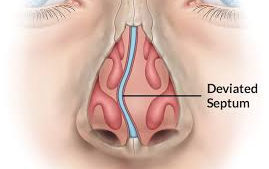
The Surgery, called functional Endoscopic Sinus Surgery (FESS), may be done either under local Anesthesia or general Anesthesia. Many very experienced Sinus surgeons prefer to use local Anesthesia. The operation generally takes approximately 2-3 hours. During that period of time, the Ear, Nose and throat doctor will do any one of a number of things including: straightening the Septum (the Bone and cartilage separating the two sides of your Nose), making an opening into the Sinus(es) on either side of the Nose so that Drainage can occur more effectively, and possibly remove some of the inflamed lining of the Sinuses. The number of Sinuses which need to be opened up depends on the nature of your problem. (For a better understanding, look at the CT scan section after you finish the FAQ page)
The surgeon uses a rigid tube (endoscope) which is inserted into the Nose. The entire operation is done through the Nose. Previously, the Surgery was done using an incision underneath the lip called a Caldwell-Luc procedure. This caused an extended post-operative healing time as well as occasional loss of sensation in the face and was not nEarly as effective as the current Surgery.
The current Surgery involves opening up the naturally occurring openings (Ostia) from the Sinuses into the Nose. (They are at the top of the Sinuses). The older procedure involved making a Drainage hole in the bottom part of the Nose, with an extensive amount of removal of tissue from inside the Nose. It was logical, but unfortunately it didn't work as well because mucus flows upwards toward the top of the Sinus aided by tiny hairs called cilia. In addition, removal of the tissue from inside the Sinuses caused scarring, so that now very little tissue is removed from inside the Sinuses.
Another posts included in "Health / General Health Care"
| What are cilia? (0) | 2009/05/08 |
| How long is the recovery after surgery? (0) | 2009/05/08 |
| How is treatment different after surgery? (0) | 2009/05/08 |
| When should surgery be considered? (0) | 2009/05/08 |
| What role do food allergies play in sinusitis (0) | 2009/05/08 |
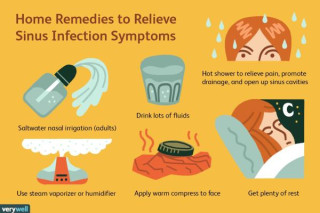
It is important to Drink a minimum of eight glasses of water per day.
Ideally, 15 or 20 glasses is helpful in order to thin the Mucus out and allow adequate Drainage.
Some of the Medications tend to make you very Thirsty.
I was once at a Dinner when I was so Thirsty that I drank 12 glasses of water!
Another posts included in "Health / General Health Care"
| Can I drink alcohol? (0) | 2009/05/08 |
| How often is follow up necessary for sinus infection? (0) | 2009/05/08 |
| Why do I have to keep my nose clear? I can breathe through my mouth. (0) | 2009/05/08 |
| What is the place of acupuncture in sinusitis? (0) | 2009/05/08 |
| How long does sinusitis have to be treated? (0) | 2009/05/08 |
The Sinuses are air pockets located inside the bones in the skull.
They are located to either side of the Nose (Maxillary), behind and in between the Eyes (Ethmoid), in the Forehead (Frontal), and there is one much further back in the head (Sphenoid).
(For a better understanding of this, please look at the CT scan page when you finish reading this page.)
They are probably present to reduce the weight of the skull as well as to create resonance to the voice.
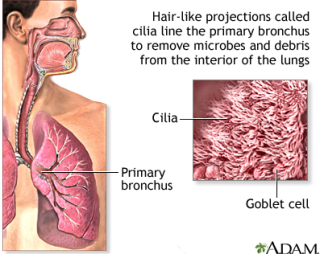
The Sinuses are lined with very fine hair-like projections called Cilia.
The function of the Cilia is to move Mucus ( which is normally produced by the Sinus) towards the tiny hole ( the ostium) about the size of a pin hole which provides Drainage for the Sinus.
Unfortunately, that hole is located at the top of the largest Sinus, and consequently Drainage may be poor.
Another posts included in "Health / General Health Care"
| What causes sinusitis? (0) | 2009/05/07 |
| How common is sinusitis? (0) | 2009/05/07 |
| Why is sinusitis increasing? (0) | 2009/05/07 |
Prev
Rss Feed